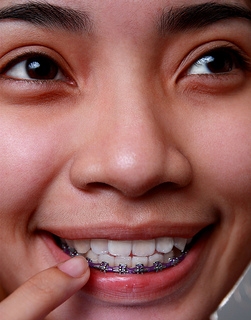
Are braces ruining your photos?

August 19th, 2020

While it’s normal to feel self-conscious, there is no reason to avoid photos just because you wear braces. Many people wear braces and you do not need to be embarrassed about them. There are also ways you can enjoy your photos without hiding your smile.

Make it Fun

Dr. Elizabeth Hite, DMD, MS and our staff offer rubber bands for braces in a wide range of colors. Choose your favorite color and wear it with pride. You can mix and match your colors too. For Valentine’s Day, try alternating red and pink bands. For the Fourth of July, use red, white, and blue!

Bands are also available in neon colors and glow-in-the-dark designs. Your imagination is the only thing holding you back. You might want to avoid using dark green bands, though. It makes it look as though you have broccoli stuck in your teeth. Gross!

Make them Disappear

If your braces still really bother you in photos, technology can quickly solve the problem. A photo-editing program, or even a simple paint program, can easily erase your braces. Zoom in on your teeth, pick your natural tooth color with the dropper, and paint your braces away.

If you have a significant amount of metal in your braces, try to avoid close-ups with flash. The flash can reflect off the metal. The important thing to remember is how good your teeth will look and feel once your orthodontic work is complete. Dr. Elizabeth Hite, DMD, MS and our staff can also show you options for braces that are not as visible as the traditional style.

Learn more here.
Find Out how Your Diet can Cause Cavities

August 12th, 2020

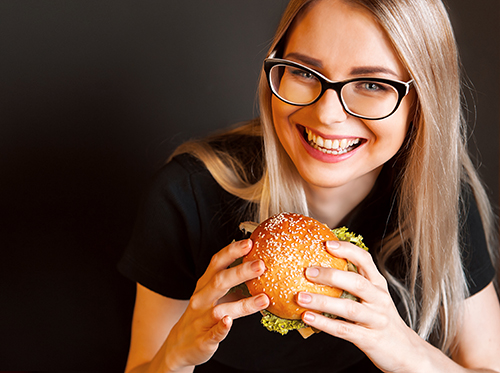
Sometimes food that’s good for your body isn’t necessarily the best for your teeth. Dr. Elizabeth Hite, DMD, MS and our team want you to know which healthy foods can harm your teeth and gums, and what steps you can take to continue enjoying these foods, even when you’re dieting.

When you begin to substitute empty calories with whole foods, make sure you also remember to focus on your dental health. The majority of people tend to switch out sugary foods in favor of fruits and vegetables when they diet.

It’s worth knowing that most fruits are highly acidic and composed of natural sugars. Some of the highly acidic fruits to watch out for include apples, grapes, strawberries, pineapples, blueberries, oranges, and grapefruit. Moderation is key here, as with all other things. Fruits can be a great source of energy to help you through your day, but try not to overdo them.

Often, people also incorporate more leafy greens into their diets, which mean plenty of salads. Salad dressing is another item you’ll want to watch out for. Many dressings are filled with vinegars and sweeteners that include harmful acids, which change the pH of your mouth. When your mouth shifts from alkaline to acidic, your smile also turns to a higher risk for erosion and decay.

Rather than get rid of these foods altogether, simply change what you do after you eat them. Rinse your mouth out with water, brush your teeth, or eat alkalizing foods after consuming these acidic foods. Healthy alkalizing foods include dairy products such as eggs and yogurt, or any type of vegetable.

If you have questions regarding your current diet and its effect on your oral health, please contact our Edwardsville office and speak with a member of our staff. If you’ve begun to make changes in your diet toward a healthier lifestyle, we hope these tips can help your make positive changes to your oral health. Our team at Bauer Hite Orthodontic Specialists wants a healthy lifestyle to be a top priority in your life.

The Evolution of Braces

July 29th, 2020

Did you know that even in ancient times, people wanted to improve the look and function of their smiles? Bauer Hite Orthodontic Specialists thinks of modern orthodontic appliances as sleek, efficient technology, but this was not always so! Take a look at the highlights in the evolution of braces.

Ancient Times: From Greece to Rome

  • According to The Angle Orthodontist, Aristotle and Hippocrates first thought about methods for straightening teeth between 400 and 300 BC.
  • The Etruscans, in what we now know as Italy, buried their dead with appliances that maintained spaces and prevented collapse of their teeth and jaws during life. Archaeologists have discovered mummified remains in various locations that have metal bands wrapped around the teeth.
  • A Roman tomb has also been discovered in which the teeth were bound with gold wire, including documentation on the wire’s use as a dental device.

18th Century: A French Development

  • The French dentist Pierre Fauchard is acknowledged as the father of modern dentistry. In 1728 he published a book that described various methods for straightening teeth. Fauchard also used a device known as a “blandeau” to widen the upper palate.
  • Louis Bourdet was another French dentist who published a book in 1754 that discussed tooth alignment. Bourdet further refined the blandeau and was the first dentist to extract bicuspids, or the premolar teeth between canines and molars, for the purpose of reducing tooth crowding.

19th Century: Orthodontics Defined

  • Orthodontics started to become a separate dental specialty during the early 19th century. The first wire crib was used in 1819, marking the beginning of modern orthodontics.
  • During this period, gold, platinum, silver, steel, gum rubber, vulcanite, and occasionally wood, ivory, zinc, and copper were used — as was brass in the form of loops, hooks, spurs, and ligatures.
  • Edward Maynard first used gum elastics in 1843 and E. J. Tucker began making rubber bands for braces in 1850.
  • Norman W. Kingsley published the first paper on modern orthodontics in 1858 and J. N. Farrar was the first dentist to recommend the use of force over timed intervals to straighten teeth.

20th Century: New Materials Abound

  • Edward Angle developed the first classification systems for malocclusions (misaligned teeth) during the early 20th century in the United States, and it is still in use today. Angle founded the American Society of Orthodontia in 1901, which was renamed the American Association of Orthodontists in the 1930s.
  • By the 1960s, gold was universally abandoned in favor of stainless steel.
  • Lingual braces were the “invisible” braces of choice until the early 1980s, when tooth-colored aesthetic brackets made from single-crystal sapphire and ceramics became popular

Today

As we arrive in the present, you need only look at your own braces to see how far we’ve come. Your treatment plan was probably created with a 3D digital model, and we’ve likely used a computerized process to customize your archwires. Perhaps you have clear aligners, self-ligating brackets, or highly resilient ceramic brackets with heat-activated wires.

Orthodontics has come a long way from the days of Aristotle, and even the bulky wrap-around braces of just 60 years ago. Regardless of your specific treatment plan, the development of high-tech materials and methods has made it possible for your orthodontic experience to be as effective, efficient, and comfortable as possible. Call our office in Edwardsville to schedule your first orthodontic consultation!

The Importance of Wearing Your Retainer after Orthodontic Treatment

July 22nd, 2020

It's the big day and your braces are finally coming off! Does that mean you are completely done? Not so fast! After you complete your treatment here at Bauer Hite Orthodontic Specialists, Dr. Elizabeth Hite, DMD, MS and our team will recommend you wear a retainer, which must be worn routinely after treatment in order to hold your teeth in their proper, new position while your gums, ligaments and bones adapt. Most patients are required to wear their retainer every night at first, with many also being directed to wear them during the day. It's important to know there are different kinds of retainers, and today we thought we would explain the differences between them.

Hawley Retainers

The Hawley retainer is one of the most common types of retainers. It is a removable retainer made of a combination of a metal wire that typically surrounds the six anterior teeth and is designed to keep your teeth in place. This retainer is made from impressions of your teeth so that it fits snugly and comfortably in the roof of your mouth, while the wire and acrylic framing keeps your teeth in an ideal position. The acrylic can also be personalized with a large number of colors or patterns.

Essix (Clear) Retainers

The Essix retainer is a transparent removable retainer that fits over the entire arch of your teeth. This clear or transparent retainer fits over the entire arch of teeth and is produced from a mold. Similar to Invisalign’s clear aligner trays, Essix retainers have no metal or wires. They can also be used to produce minor tooth movements and can be helpful in prevention of tooth wear due to tooth grinding at night.

Bonded Retainers

Bonded lingual retainers are cemented directly to the inside surface of your lower canines. Dr. Elizabeth Hite, DMD, MS and our team at Bauer Hite Orthodontic Specialists encourage our patients with bonded lingual retainers to be careful with their bite as the bonding material may break due to incorrect biting and cause your teeth to shift. As with removable retainers, it is important to keep your bonded retainers clean. When brushing, make sure to carefully clean the inside of your lower teeth, as well as the wire itself.

The retention phase of treatment begins when the patient’s braces are removed. Retainers are worn full time, typically for the first nine months, except while eating. Retainers should also be removed before brushing your teeth.

If you have any questions about the retainers we offer or to learn more about post-orthodontic treatment, please feel free to contact us at our convenient Edwardsville office and we will be happy to answer any of your questions!

Back to Top
Contact Us!
call email