
Let’s Be Perfectly Clear!

April 25th, 2023

One of the most common reasons for choosing clear aligners is that they are just that—clear! You can achieve a healthy, beautiful smile without the more obvious wires and brackets of traditional braces. But if your aligners are noticeably stained well before it’s time to replace them, you can be facing days or weeks of self-conscious smiles.

Luckily, this problem is preventable. Let’s look at some of the common causes of aligner discoloration and how to avoid them.

  • Beverages that Stain Teeth Stain Aligners

You take your aligners out to eat, of course, but do you always remember to remove them when you drink a beverage? Red wines, coffee, tea, dark juices, and sodas don’t just cause enamel staining—they can discolor your aligners as well. Even worse, drinking an acidic or sugary drink with your aligners on gives that acidic, sugary beverage an opportunity to bathe your teeth in acids and sugar over a period of time. Keep your aligners (and your enamel) protected by removing them when you drink anything other than water, and brush your teeth before you replace them. If you absolutely can’t remove aligners, a straw will reduce the risk of staining.

  • Soaking in Mouthwash

Mouthwash is a way to keep your teeth and mouth fresh-smelling and free from bacteria. You also want your aligners to stay fresh and bacteria-free. So, what could be the problem in giving your aligners a good soak? Well, sometimes a colorful mouthwash can stain your aligners to match! If you’re not a fan of tinted aligners, talk to us about the safest ways to use mouthwash with your appliance.

  • Using Harsh Cleaners

There are products specifically made for aligners which will keep them their cleanest and clearest. Harsh cleaners and even toothpastes can be abrasive, leaving visible scratches or cloudiness. We’re happy to recommend the best and safest cleaning products for your aligners.

  • Inadequate Cleaning

Plaque, that bacteria film that can stick to your enamel and around your gum line, can also stick to your aligners. If you notice a white film on your appliance, it could be plaque. Thorough and regularly scheduled cleanings are essential. Talk to us about the best schedule and methods for keeping your aligners not only clear, but sanitary.

What if, despite taking precautions, your aligners do get stained? If your aligners are new, we might be able to offer you some suggestions to get you through the next week or so. If you are almost ready for your next set of aligners, you might have no problem waiting. But the simplest solution to stained aligners is prevention.

Talk to Dr. Elizabeth Hite, DMD, MS at our Edwardsville office about how to keep your aligners looking their best—and least visible. Whether it’s diet suggestions or the most effective soaking and cleaning techniques, we have the answers to ensure your brightest, most confident smile. After all, isn’t that one of the reasons you chose clear aligners?

Top Ways to Ensure You and Your Braces Have a Good Relationship

April 25th, 2023

You and your braces will become good friends over the coming months or years, so it’s important to get your relationship off to a good start. Consider the following recommendations to prevent rocky times ahead:

  1. Floss, floss, floss. Yes, it’s a pain to floss around your braces, but it's the best way to prevent gum disease and other oral health problems. Ask Dr. Elizabeth Hite, DMD, MS and our staff for floss threaders to make the chore easier. Just a few minutes per day will ensure that you don’t face significant dental health issues when the braces come off.
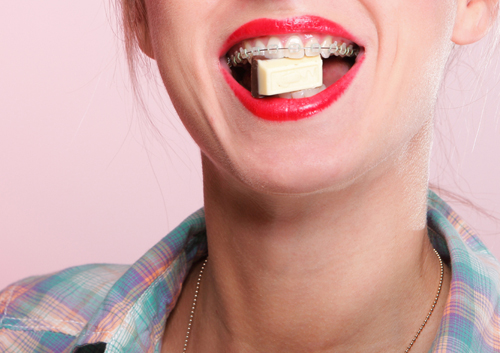
  2. Avoid sticky or hard foods. It’s tough to forgo toffee, caramel, gum, and other favorite sticky treats, but your braces will thank you. Sticky or hard foods can break a bracket or wire, so it’s best to avoid them altogether.
  3. Chew with your back teeth. If you’re used to taking large bites with your front teeth, it might be time to switch your eating habits. Taking a large bite of food with your front teeth can leave your braces vulnerable to damage. Instead, cut large foods into pieces and use your back teeth to chew. This is especially important with corn on the cob, which should always be cut from the cob.
  4. Wear rubber bands and headgear. Rubber bands, headgear, and other orthodontic appliances may seem annoying, but failing to comply with wearing them can increase the length of your treatment by months. Wear them now to avoid problems in the future.

Cosmetic Braces Options

April 24th, 2023

If you’re like most adults, you aren't enthused about the idea of having to get traditional metal braces. The look, feel, and cost keep many people from getting the smile they want.

However, many options are available at our Edwardsville office if you’re looking for a cost-effective and more discreet way to straighten your teeth.

Choosing the right kind of cosmetic braces depends on the severity of your situation. Some cosmetic braces, such as clear aligners, are best suited for mild to moderate spacing or crowding of the teeth, and minimal bite alignment issues. But there are options for people who need more intense treatment.

Below is a list of some of the most popular options available today.

Invisalign® involves multiple clear aligner trays that you wear in a predetermined order to achieve the desired treatment result. Most people won’t even know you’re wearing them, and they offer solid results. Clear aligners might not be suitable for all cases; they are mainly for those with mild to moderate spacing or crowding of the teeth and minimal bite alignment issues.

Ceramic braces are similar to traditional braces, but less visible due to translucent ceramic brackets and/or wires. They are not quite as discreet as clear aligners such as Invisalign, but they are more subtle than traditional braces and can be used for most cases.

Lingual braces are attached to the back of your teeth instead of the front. They are highly discreet but effective at moving teeth and correcting bite issues. Their cost is higher due to the materials involved, and the additional time and effort required to place them accurately.

Self-ligating braces are similar to traditional metal braces, but no elastics (ligatures) are required on the bracket because they have built-in clips to hold the wire against your teeth. People will perceive you’re wearing them, but they don’t need as many adjustments from Dr. Elizabeth Hite, DMD, MS, so you’ll require fewer appointments and undergo a shorter treatment time.

It’s only natural to have questions before you embark on a course of braces treatment. Speak with Dr. Elizabeth Hite, DMD, MS or any of our staff members at our Edwardsville office about your goals, budget, and timeframe, and we’ll help you find the right fit!

Snowball Effect

April 5th, 2023

Winter and its snowball fights are behind us, true, but there might be another kind of snowball heading your way. When you neglect the small steps involved in your everyday orthodontic routines, little problems can start to snowball into bigger ones, affecting your dental health and delaying your orthodontic progress.

Here are three areas where letting the small steps in your routine slide can have consequences:

Dental Hygiene

It can be harder to get your teeth their cleanest while you’re wearing braces. After all, there are wires to get behind and brackets to brush around, and you still need to get that floss in between your teeth. But neglecting your dental hygiene can have big consequences:

  • Demineralization

The bacteria in plaque create acids that strip the minerals from tooth enamel. This process is called demineralization. Wherever plaque is allowed to build up, you’ll start to see white spots in the enamel. This discoloration is a sign that minerals are missing, and is often found around brackets, where it’s harder to brush. White spots can be treated cosmetically, but better to avoid them as much as possible, because eventually they can become . . .

  • Cavities

As demineralization continues, the enamel becomes weaker and weaker, until a hole forms in the tooth—a cavity. Besides damaging your tooth, a cavity can put you behind your orthodontic schedule if you need parts of your braces removed for treatment.

  • Gum Disease

When plaque builds up around the gums, gum tissue becomes inflamed and irritated—this is gingivitis, or early-stage gum disease. Symptoms often include puffy gums, redness, bleeding, and bad breath. Mild gum disease becomes more serious over time, so treat gingivitis early—or, even better, prevent gum disease with careful brushing and flossing.

Looking After Your Appliances

  • Follow Care Instructions

Orthodontic appliances need love, too! Any instructions you get for their care are for a good reason. Brackets can become loose when you bite down on chewy foods. Wires can break when you eat hard candy. Aligners can warp if you leave them on a hot dashboard. If you follow instructions carefully, you won’t need to postpone your progress while you wait for repairs.

  • Use Your Protective Case

If you wear aligners, or a removable appliance, or a retainer, don’t forget to protect these items when you’re not wearing them. This means placing them in their cases, not wrapped in a napkin on your lunch tray, or in the bottom of your gym bag, or anywhere your dog can reach them!

  • Be Proactive If Accidents Happen

Unfortunately, accidents do happen, and loose brackets, broken wires, lost ligatures, and cracked or warped aligners can interrupt orthodontic progress and cause you pain and discomfort. Give our Edwardsville orthodontic office a call to see if minor damage to an appliance can be handled at home, or whether you should be seen before your next regular appointment for repairs.

Following Your Orthodontic Plan

There’s more to following your orthodontic schedule than arriving on time for appointments. Depending on your treatment, you might be responsible for keeping track of the time you spend wearing:

  • Elastics

Elastic bands can be used to help align your upper and lower jaws. If you don’t wear your bands as directed, you won’t make progress as quickly as you could. And remember to replace your elastics as often as recommended, because after hours of s-t-r-e-t-c-h-i-n-g they lose their effectiveness.

  • Aligners

Most aligners are worn for around 22 hours each day. If you don’t follow your orthodontist’s instructions and wear your aligners for the recommend hours each day, your teeth won’t be in the proper alignment when your next set of trays is ready to begin work.

  • Retainers

If you have a retainer and don’t wear it, your teeth will start to shift position. Skip wearing your retainer long enough, and you might need a return to your braces or aligners to repair any new misalignment.

Don’t ignore what seem like little dental and orthodontic responsibilities. Keep up with daily cleaning and brushing, take care of your appliances, and follow your orthodontic plan, and you’ll finish your treatment with a beautiful and healthy smile—right on schedule.

Back to Top
Contact Us!
call email